
· 3 min read
Lost pet checklist: what to do in the first 24 hours
A step-by-step plan for when your dog or cat goes missing, plus the simple things you can do today to make a reunion more likely.
Few things are as frightening as realising your pet is gone. The good news is that most lost pets are found, and the first few hours make the biggest difference. Here’s a calm, practical plan to follow.
Right away: the first hour
- Search close by, carefully. Check inside the house first: closets, under beds, behind appliances, garages and sheds. Then work outward in widening circles.
- Bring their favourite things. A squeaky toy, a treat bag they recognise, or the sound of their food bowl.
- Call calmly, then stop and listen. Shouting can scare a nervous pet into hiding further away. Frightened pets often go quiet.
- Get help. Ask neighbours to check their gardens, sheds and garages. More eyes cover more ground.
In the first few hours
- Mark your pet as lost. If their ID tag or card links to a profile, update it so anyone who scans it knows your pet is missing. In Petizen, setting your pet’s status to Lost updates the ID card and the QR profile instantly.
- Check the microchip registry. Make sure your phone number and address are up to date, and report your pet missing if the registry allows it.
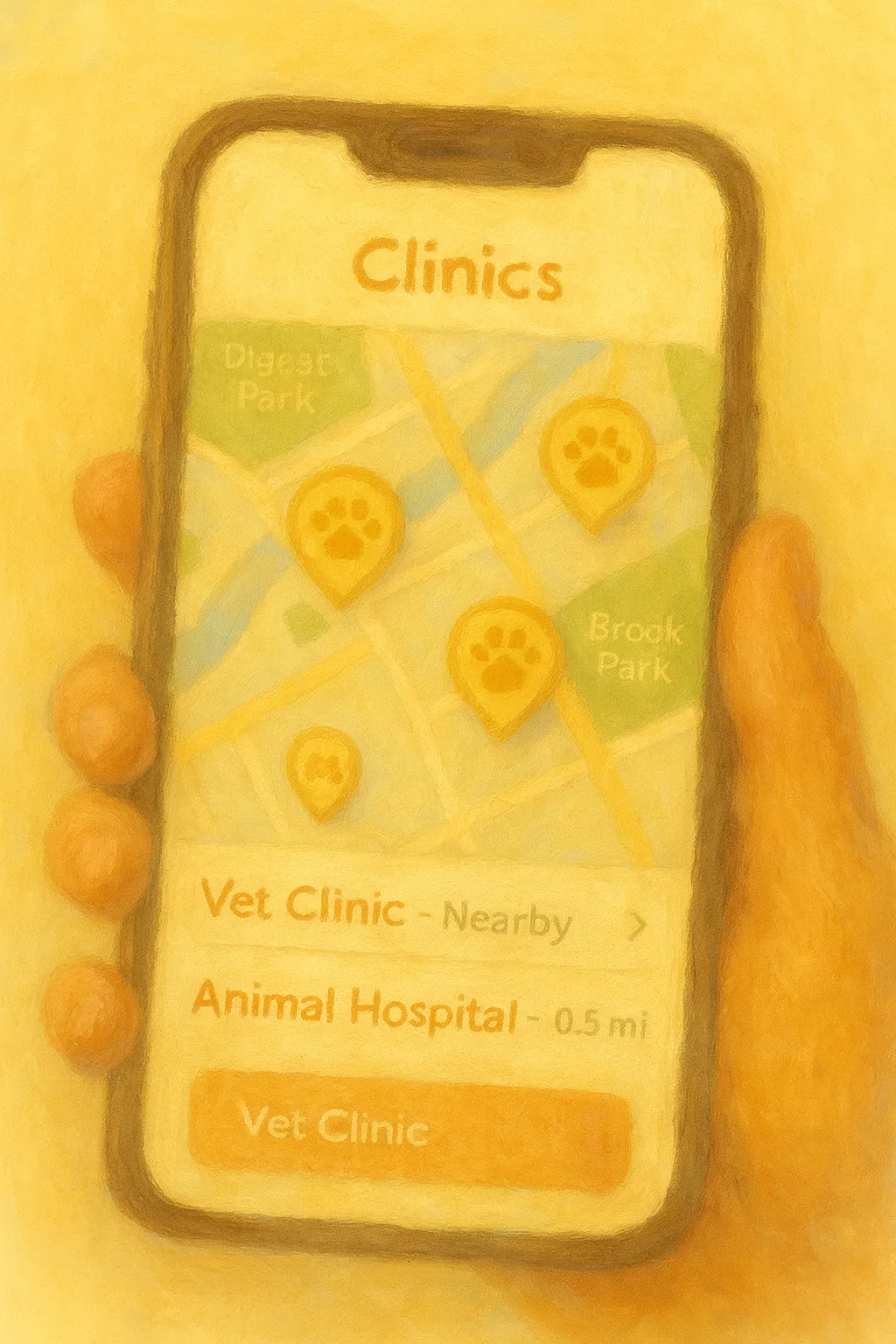
- Call local shelters, animal control and nearby vet clinics. Give them a description and your number. Then visit shelters in person every day or two. Descriptions over the phone are easy to mix up.
- Post online. Local lost-pet groups, neighbourhood apps and community pages spread the word fast. Use a clear, recent photo.
Within 24 hours
- Put up posters. Use a big photo, the word LOST in large letters, the area, and your phone number. Keep text short so it can be read from a moving car. Put them at eye level near intersections, vets, pet stores and shops.
- Leave familiar scents outside. An unwashed blanket or a worn item of clothing by the door can help a pet find its way back. Some owners also leave the litter box outside for cats.
- Keep going after dark. Many lost pets move when it’s quiet. Search again late in the evening and early in the morning.
- Watch out for scams. Never send money to someone who says they have your pet before you’ve seen proof. Meet in a public place.
What to do today, before anything happens
The best time to prepare for a lost pet is when they’re safely asleep on the sofa:
- Microchip your pet and register the chip. A chip only works if the registry has your current contact details. Write down the number.
- Use a collar with ID. A tag or a scannable QR code lets a neighbour contact you without a trip to the vet.
- Take good photos now: a clear face shot, a full side view, and any unique markings.
- Write down markings and features. A white patch, a notched ear or a kinked tail can prove a pet is yours.
- Choose what a finder can see. With Petizen, the QR code on your pet’s ID card opens a public profile. You choose whether it shows your emergency contact, medical needs and health records. Each is a separate switch, and all of them are off by default.
When your pet comes home
- Check them over for injuries, ticks, cuts on the paws and signs of dehydration. A vet check is a good idea if they were gone for more than a day.
- Take down your posters and update the online posts, so people stop looking.
- Set your pet’s status back to Home on their profile and with the microchip registry.
- Fix the escape route, whether it’s a gap in the fence, a loose screen or a door that doesn’t latch.